
The Science Behind Healthy Skin: What Your Skin Actually Needs
Healthy skin is not necessarily poreless, flawless, or filtered.
It has texture. It changes with age, hormones, environment, stress, and lifestyle. It may occasionally break out, feel dry, or look less radiant than usual.
So what actually makes skin healthy?
From a medical perspective, healthy skin depends on several interconnected factors, including a functioning skin barrier, adequate hydration, appropriate cell turnover, structural proteins such as collagen, protection from ultraviolet radiation, and a skincare routine that supports rather than constantly disrupts the skin.
At GlowMD Aesthetics & Wellness, we believe understanding the science behind your skin makes it easier to make thoughtful decisions about skincare products and professional treatments.
Instead of asking, "How do I make my skin perfect?", a more useful question is:
"What does my skin need to function and look its healthiest?"
Let's explore the science.
Your Skin Is an Organ, Not Just an Appearance
We often talk about skin primarily in cosmetic terms.
Fine lines.
Pores.
Pigmentation.
Acne.
Glow.
But your skin is your body's largest organ, and it performs essential functions.
The skin helps provide a protective barrier between your body and the outside environment. It contributes to temperature regulation, sensation, immune defense, and prevention of excessive water loss.
That means good skincare should not focus exclusively on how skin looks.
It should also respect how skin functions.
Aggressively exfoliating, layering multiple active ingredients, or repeatedly disrupting the skin in pursuit of instant results can sometimes work against that goal.
Healthy skin starts with supporting its biology.
1. A Healthy Skin Barrier Is Foundational
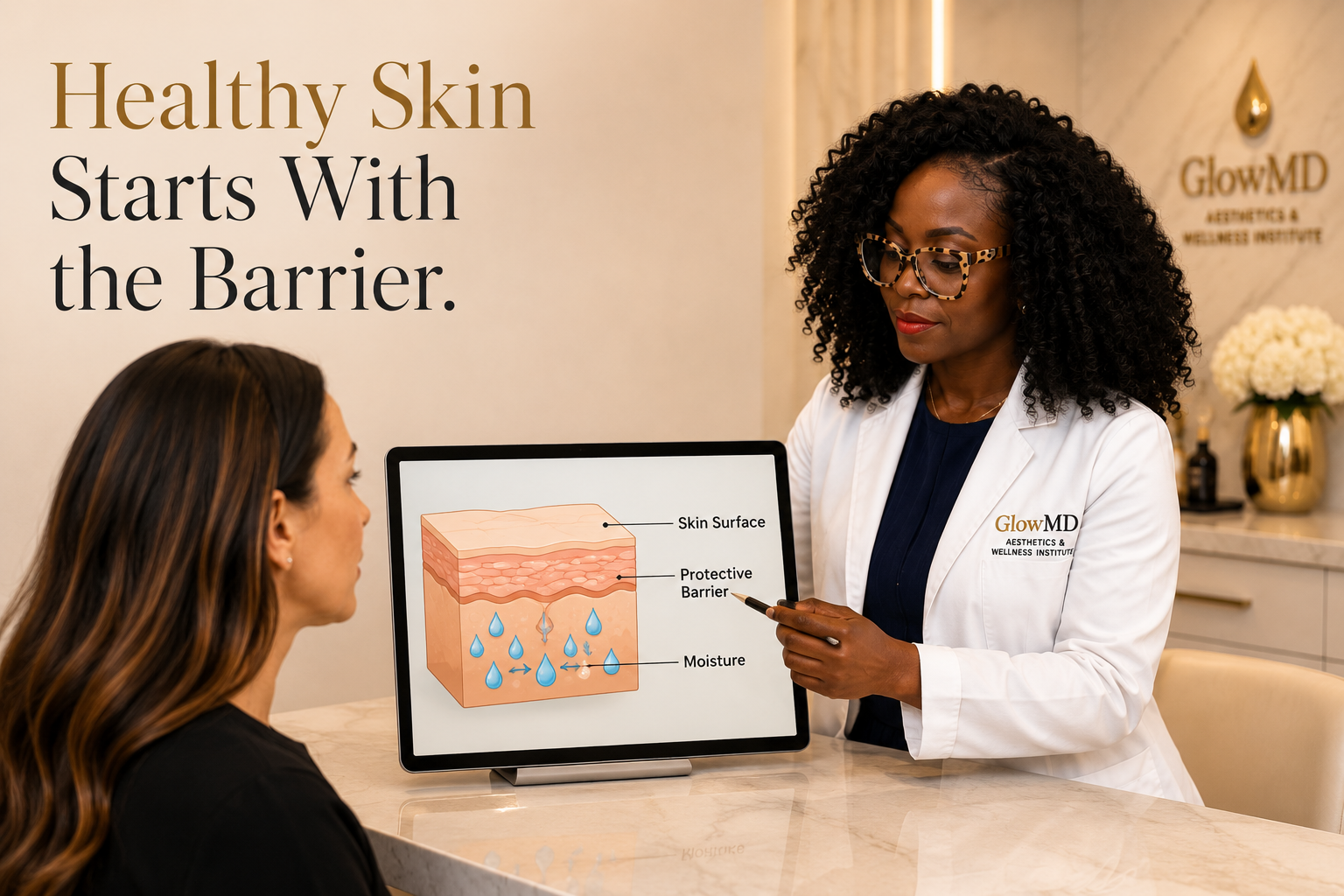
One of the most important concepts in skin health is the skin barrier.
The outermost portion of the epidermis, called the stratum corneum, plays an important role in reducing water loss and protecting the body from environmental exposures.
A commonly used analogy is a brick wall.
The skin cells act like the bricks, while lipids surrounding them help form the mortar.
When this barrier is functioning well, it helps retain moisture while limiting the penetration of potential irritants.
When the barrier becomes disrupted, you may notice symptoms such as:
Dryness
Tightness
Flaking
Increased sensitivity
Stinging
Roughness
Irritation
This is why more skincare is not always better skincare.
If your skin barrier is already irritated, repeatedly adding strong exfoliating acids, scrubs, or other active products may make symptoms worse.
Sometimes healthy skincare begins by doing less.
2. Hydration and Moisture Are Not Exactly the Same Thing
"Hydrated skin" has become one of the most common phrases in beauty marketing.
But hydration is more complicated than simply drinking more water or applying the thickest moisturizer available.
The skin needs to maintain an appropriate balance of water and lipids.
Skincare ingredients can support this in different ways.
Humectants help attract and retain water.
Emollients can help smooth and soften the skin.
Occlusive ingredients can help reduce water loss from the skin surface.
Which combination works best depends on your skin.
Someone with oily but dehydrated-feeling skin may need a different routine from someone with chronically dry skin.
This is why skincare should be selected according to skin behavior and condition, not simply whether a product is trending.
3. Cell Turnover Influences Texture and Radiance
Your skin is continuously renewing itself.
Cells are produced within deeper portions of the epidermis and eventually move toward the surface, where they are shed.
This natural process contributes to the appearance and texture of the skin.
As skin changes with age and environmental exposure, its appearance may become:
Duller
Rougher
Less even
More textured
Exfoliation can help some patients improve surface texture, but excessive exfoliation can disrupt the skin barrier.
This is why the strongest acid or most aggressive scrub is not automatically the best choice.
Professional treatments such as HydraFacial, chemical exfoliation, and other skin treatments may be useful for appropriate patients, but the treatment should be matched to the individual's skin condition and goals.
4. Collagen Provides Structural Support
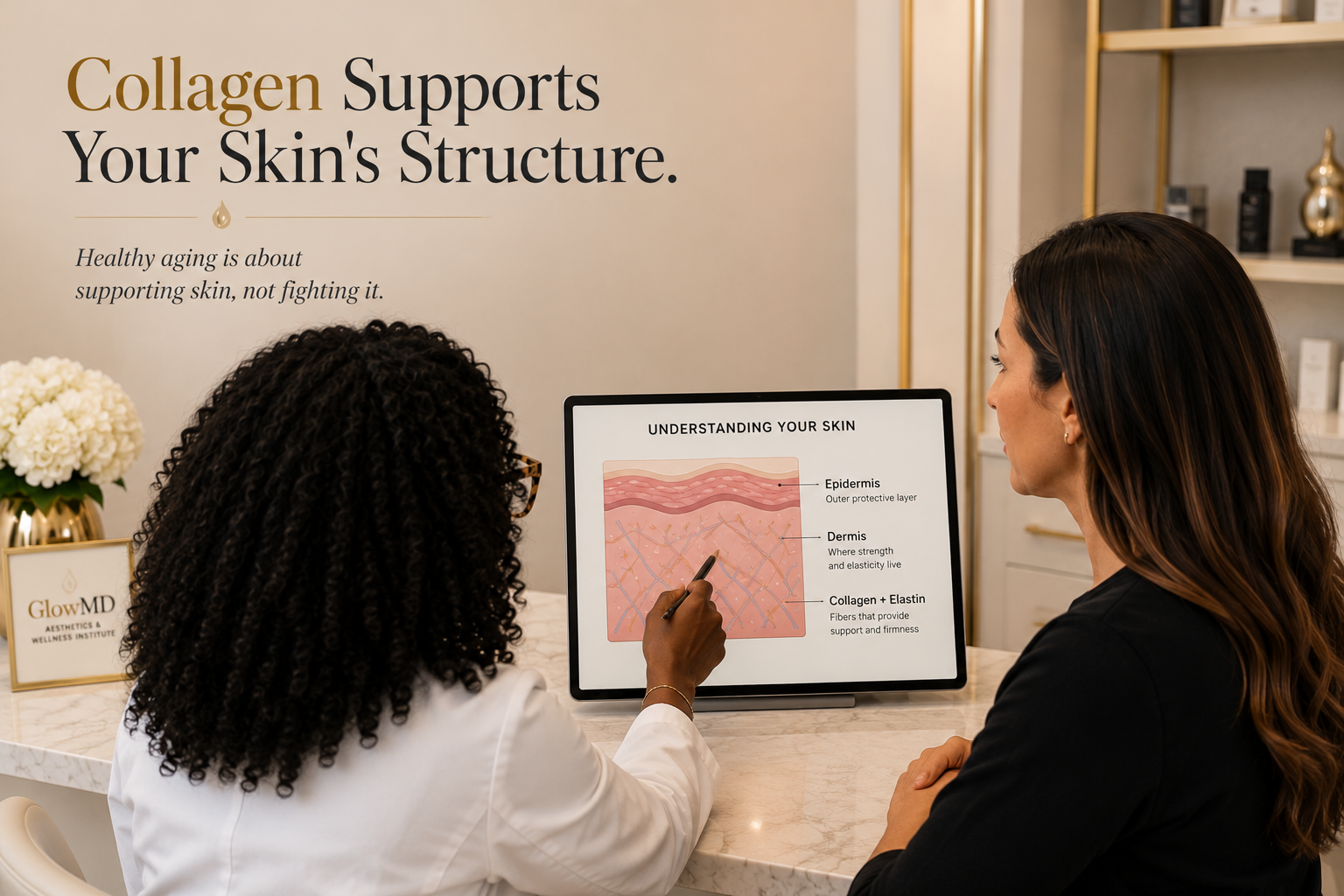
Collagen is one of the major structural proteins within the skin.
It contributes to the skin's strength and support.
Over time, changes in collagen and other components of the dermal structure contribute to visible signs of skin aging.
This can include changes in:
Fine lines
Firmness
Elasticity
Texture
Overall skin quality
Sun exposure is also an important contributor to premature visible skin aging.
This is why collagen-focused aesthetic treatments should never be discussed without also discussing sun protection.
Professional procedures such as microneedling may be considered for certain patients because controlled micro-injury can initiate wound-healing processes associated with collagen formation and tissue remodeling.
But collagen remodeling takes time.
Healthy skin is a long-term biological process, not an overnight transformation.
5. Sunscreen Is One of the Most Important Anti-Aging Tools
If you invest in expensive serums and professional treatments but consistently ignore sun protection, you're missing one of the most important components of skin health.
Ultraviolet radiation contributes to skin cancer risk and visible signs of premature skin aging, including changes in pigmentation, texture, and wrinkles.
For everyday protection, the American Academy of Dermatology recommends a sunscreen that provides:
Broad-spectrum protection
SPF 30 or higher
Water resistance
Sunscreen is not only for beach days.
UV exposure happens during ordinary life.
Professional treatments can support certain skin concerns, but they cannot replace consistent sun protection.
Think of sunscreen as part of your daily skin health strategy, not simply another beauty product.
6. Your Skin Microbiome Matters
Your skin is home to communities of microorganisms collectively referred to as the skin microbiome.
These microorganisms exist as part of the skin's complex biological ecosystem and interact with the skin barrier and immune system.
Research into the skin microbiome continues to evolve.
This is an area where beauty marketing sometimes moves faster than the science.
You may see products claiming to "balance," "reset," or "restore" the microbiome.
Some formulations may support the skin environment, but consumers should be cautious about assuming that every microbiome-related marketing claim has strong clinical evidence behind it.
One practical takeaway remains valuable:
Healthy skin generally does not need to be aggressively stripped, scrubbed, and sterilized.
Gentle, appropriate skincare matters.
7. Inflammation Can Change How Your Skin Looks and Feels
Inflammation is part of the body's normal immune response.
But persistent or excessive inflammation can influence how skin looks and feels.
Inflamed skin may appear:
Red
Swollen
Irritated
Sensitive
Itchy
Uncomfortable
Acne, eczema, rosacea, allergic reactions, infections, and other conditions can involve inflammatory processes.
This is where knowing the difference between a cosmetic concern and a medical skin condition becomes important.
Not every red patch needs a facial.
Not every breakout needs aggressive exfoliation.
And not every pigmentation concern should be treated with the same product.
When symptoms are persistent, painful, worsening, or unusual, appropriate medical evaluation may be more important than adding another skincare product.
What Does a Science-Based Skincare Routine Look Like?
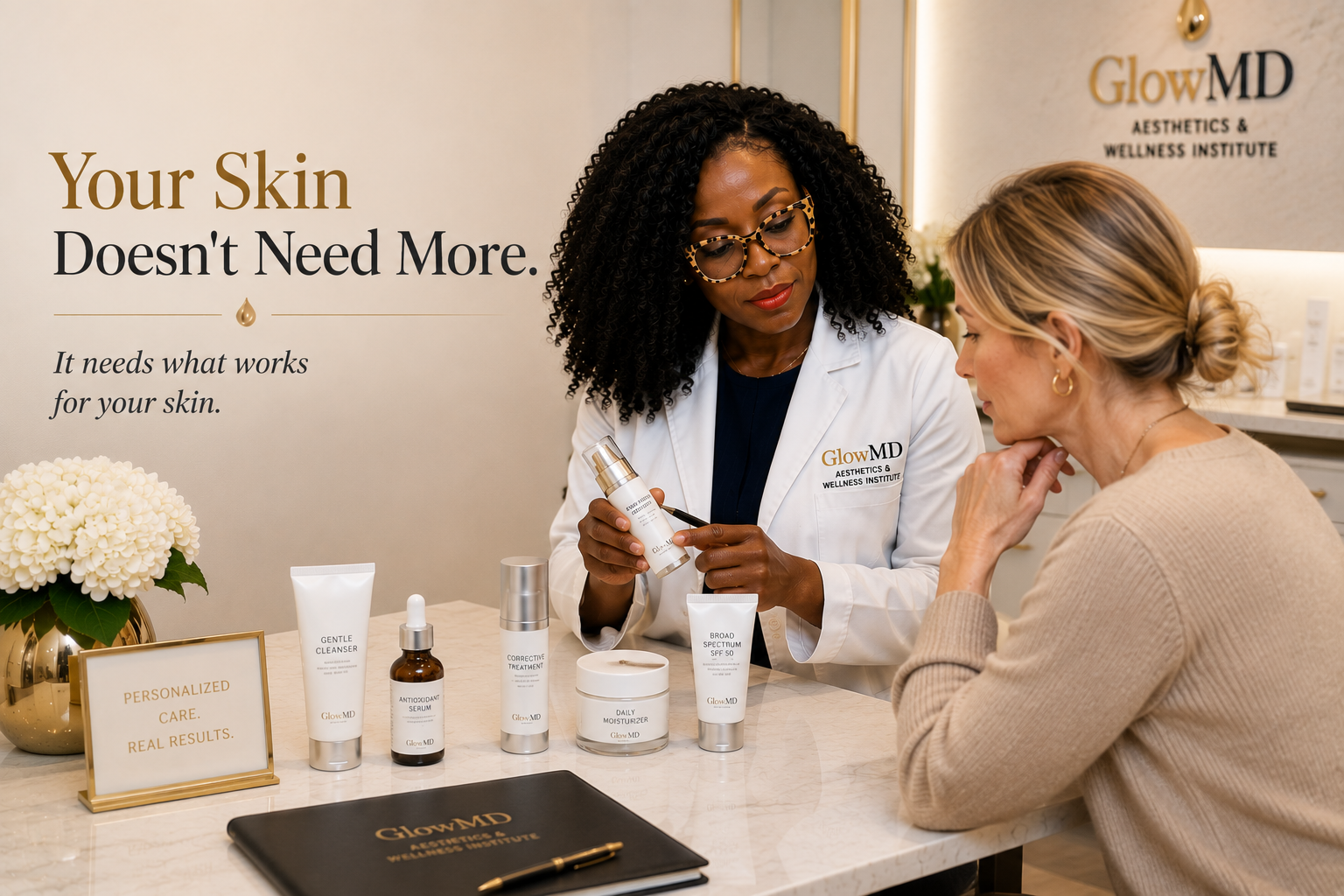
A good skincare routine does not need 12 steps.
For many people, a thoughtful foundation begins with a few essentials.
Step 1: Cleanse
Use a cleanser appropriate for your skin type to remove makeup, sunscreen, oil, and environmental debris without unnecessarily stripping the skin.
Your face should feel clean after washing.
It should not necessarily feel tight.
Step 2: Use Targeted Ingredients When Appropriate
This is where individual goals matter.
Depending on your skin, a professional may recommend ingredients targeting concerns such as acne, pigmentation, texture, or visible signs of aging.
More active ingredients do not automatically produce better results.
A well-designed routine prioritizes purpose over quantity.
Step 3: Moisturize
Moisturizer can help support hydration and skin barrier function.
The appropriate texture and formulation depend on your skin.
Step 4: Protect
During the day, use appropriate sun protection.
Consistency matters more than owning the most expensive sunscreen available.
Where Do Professional Skin Treatments Fit?
Professional treatments can complement a strong home skincare routine.
But they should not replace it.
Depending on your skin and goals, a professional plan may include treatments such as:
HydraFacial
Professional facials
Microneedling
Chemical exfoliation
Other individualized aesthetic treatments
Each addresses different concerns.
For example:
HydraFacial focuses primarily on surface cleansing, exfoliation, extraction, and hydration.
Microneedling creates controlled micro-injuries intended to stimulate wound-healing and tissue-remodeling processes.
Botox works differently altogether by temporarily reducing targeted muscle activity and is used for specific expression-related lines.
This is why collecting procedures isn't the same as having a treatment plan.
The science should determine the treatment, not the trend.
Can Lifestyle Affect Your Skin?
Skin health does not exist independently from the rest of your body.
Factors such as sleep, nutrition, stress, smoking, environmental exposures, medications, and certain health conditions can influence the skin.
That does not mean every breakout is caused by stress or every dull complexion can be fixed by drinking more water.
Skin biology is more complicated than wellness slogans.
But a whole-person perspective can still be valuable.
For example, if your skin suddenly changes, it can be helpful to consider:
Have you started a new medication?
Has your skincare routine changed?
Are you using more active ingredients?
Have you had significantly more sun exposure?
Are you experiencing hormonal changes?
Have environmental conditions changed?
Are symptoms persistent enough to warrant medical evaluation?
Healthy skin requires curiosity, not blame.
What Healthy Skin Actually Looks Like
Social media has distorted our expectations of normal skin.
Real skin has:
Pores
Texture
Fine lines
Hair
Occasional blemishes
Natural variation in tone
The goal of skincare should not be to make your face look digitally filtered in real life.
Healthy skin is skin that is appropriately supported, protected, and cared for.
Aesthetic medicine can help improve concerns that matter to you.
But the objective should not be erasing every sign that you are human.
At GlowMD, we believe in healthy skin over perfect skin.
When Should You Seek Professional Help for Your Skin?
Consider professional evaluation if:
Your skincare routine consistently causes burning or irritation
You experience persistent breakouts
Your skin suddenly becomes significantly different
You have ongoing redness or sensitivity
Pigmentation is changing or concerning
You aren't sure which treatments are appropriate
You are considering procedures such as microneedling
You're spending significant amounts on skincare without understanding what your skin actually needs
A consultation can help separate three important questions:
What is normal?
What is cosmetic?
What may require medical attention?
That distinction can save you from unnecessary products, inappropriate treatments, and frustration.
The GlowMD Approach to Healthy Skin
Healthy skin is not created by one miracle serum.
It isn't created by one facial.
And it certainly isn't created by following every skincare trend online.
It is built through consistent habits, appropriate products, sun protection, thoughtful professional treatments, and understanding how your individual skin behaves.
At GlowMD Aesthetics & Wellness, our philosophy is simple:
Assess first. Treat intentionally. Protect your results.
We want our patients to understand not only what we're recommending, but also why.
Because when you understand the science behind your skin, you can make better decisions about how you care for it.

Ready to Understand What Your Skin Actually Needs?
If you're overwhelmed by products, unsure which professional treatment is appropriate, or simply want a more intentional approach to healthy skin, start with a personalized consultation.
At GlowMD Aesthetics & Wellness, we'll consider your skin concerns, current routine, goals, previous treatments, and individual needs before recommending a plan.
Healthy skin starts with understanding your skin.
Book your GlowMD consultation:www.drglowtx.com/book
