
Everything You Need to Know Before Botox
Botox is one of the most recognized names in aesthetic medicine, but popularity should never replace understanding.
If you're considering Botox for the first time, you may have questions like:
Will I still look like myself?
Will my face look frozen?
How long does Botox last?
When will I see results?
How do I choose the right injector?
These are exactly the kinds of questions you should be asking.
BOTOX® Cosmetic, or onabotulinumtoxinA, is a prescription medication that temporarily reduces targeted muscle activity. In the United States, it is FDA approved for temporary improvement in the appearance of moderate to severe forehead lines, frown lines between the eyebrows, crow's feet, and vertical bands connecting the jaw and neck in adults.
At GlowMD Aesthetics & Wellness, our approach is not about changing the way you look.
It is about understanding your facial anatomy, expressions, goals, and preferences so treatment can be approached thoughtfully and conservatively.
Before booking your first appointment, here is everything you need to know before Botox.
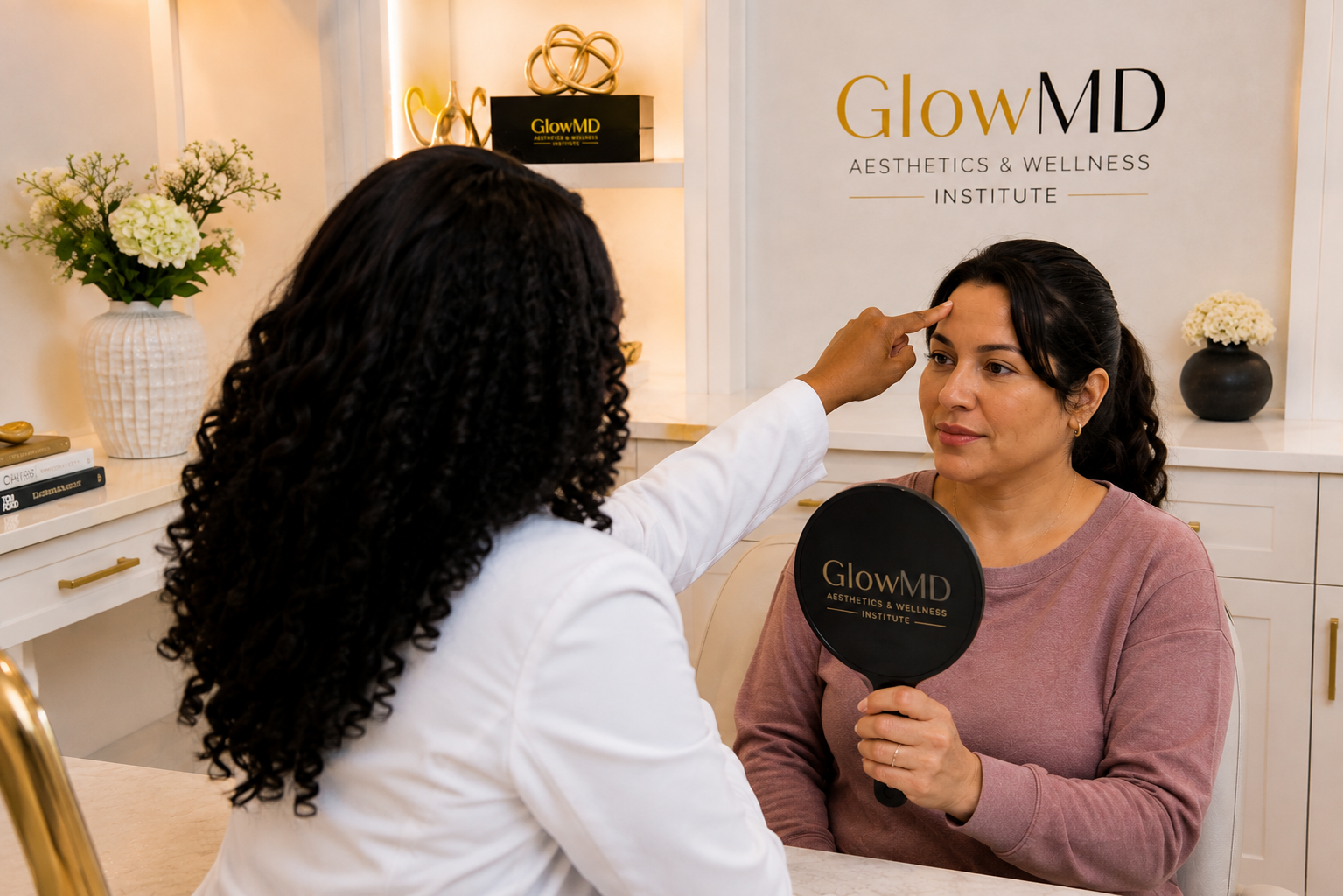
What Is Botox?
Botox is the brand name for onabotulinumtoxinA, a type of botulinum toxin used for both medical and cosmetic indications.
In aesthetic treatment, Botox is injected into specific muscles to temporarily reduce muscle activity.
Repeated facial expressions such as frowning, squinting, or raising the eyebrows contribute to certain dynamic lines over time. Botox works by temporarily reducing activity in selected muscles responsible for those movements.
It does not "fill" wrinkles.
That distinction matters.
Botox and dermal fillers are different treatments with different mechanisms and purposes.
Botox primarily influences muscle activity. Dermal fillers are injectable products used to add or restore volume in selected areas.
Which treatment is appropriate depends on what is actually causing the concern you want addressed.
What Areas Can Botox Treat?
For cosmetic use, BOTOX Cosmetic is FDA approved in adults for temporary improvement of moderate to severe:
Frown lines between the eyebrows, also called glabellar lines
Crow's feet around the eyes
Forehead lines
Vertical bands connecting the jaw and neck, known as platysma bands
You may also hear people discuss other uses of botulinum toxin in aesthetic practices.
Not every commonly discussed use is necessarily an FDA-approved cosmetic indication for BOTOX Cosmetic, which is another reason your consultation should include a clear discussion of what is being recommended and why.

Will Botox Make Me Look Frozen?
This is one of the most common concerns among first-time Botox patients.
Botox treatment does not inherently require eliminating every facial expression.
The outcome depends on several factors, including treatment areas, anatomy, muscle strength, dose, injection technique, and your desired result.
A thoughtful consultation should include a conversation about how much movement you want to maintain.
Some patients prefer a more noticeable reduction in movement.
Others want a very subtle result that softens lines while preserving considerable expression.
At GlowMD, we believe the goal should be to help you look refreshed while still looking unmistakably like yourself.
The objective is not to create someone else's face.
It's to develop a plan for your face.
When Will I See Botox Results?
Botox does not typically reach its final effect immediately after treatment.
According to the manufacturer, patients treated for forehead lines, frown lines, and crow's feet may begin seeing results within approximately 1 to 2 days, with full results assessed at about 30 days. Individual experiences can vary. This means you should not judge your final result immediately after leaving the appointment.
Your treatment needs time to take effect.
It is also possible for different areas to appear to respond at slightly different rates.
Following your provider's recommended follow-up plan is more useful than repeatedly examining your face in the mirror several hours after treatment.
How Long Does Botox Last?
Botox is temporary.
For the FDA-approved cosmetic treatment areas described by the manufacturer, results may last up to approximately four months, although individual duration varies. The manufacturer also states that treatments should be spaced at least 90 days apart.
How long your individual results last may be influenced by factors such as:
Treatment area
Dose
Individual muscle activity
Treatment history
Individual response
This is why you should avoid comparing your Botox schedule with a friend's.
Your treatment plan should be based on your own response and your provider's recommendations.
What Should You Tell Your Provider Before Botox?
Your Botox consultation is not the time to leave out information because something seems unrelated.
Your provider needs an accurate health history to evaluate treatment appropriately.
According to current BOTOX Cosmetic safety information, patients should tell their healthcare professional about medical conditions, including muscle or nerve conditions, previous facial surgery, problems raising the eyebrows, drooping eyelids, pregnancy or plans for pregnancy, and breastfeeding. Patients should also disclose previous botulinum toxin treatments and medications they are taking.
Before treatment, be prepared to discuss:
Your medical history
Current medications
Supplements
Allergies
Previous Botox or other botulinum toxin treatments
Previous aesthetic procedures
Facial surgery
Neuromuscular conditions
Pregnancy or plans to become pregnant
Breastfeeding
Your aesthetic goals
Do not assume your provider "doesn't need to know."
The consultation is part of the treatment.
Who Should Not Receive Botox?
BOTOX Cosmetic has specific contraindications.
According to FDA-approved prescribing information, it should not be administered to patients with a known hypersensitivity to botulinum toxin preparations or their components, or when there is an infection at the proposed injection site.
There are also health conditions and medications that may require additional consideration.
This is why Botox should be approached as a medical treatment, not simply a beauty appointment.
If your provider determines that treatment is not appropriate for you, that decision is part of good medical care.
Does Botox Hurt?
Individual experiences differ, but Botox injections use a small needle and the treatment itself is generally brief.
Patients may experience temporary discomfort at injection sites.
Some people describe the sensation as a quick pinch.
Your experience can also depend on the treatment location, number of injections, and individual sensitivity.
Being nervous before your first injectable appointment is completely normal.
A good provider should explain what is happening before and during treatment rather than rushing you through the experience.
What Are the Possible Side Effects of Botox?
Botox is a prescription medication, and side effects are possible.
Current BOTOX Cosmetic safety information lists potential adverse effects including injection-site discomfort or pain, headache, dry mouth, tiredness, neck pain, and eye-related effects such as eyelid or eyebrow drooping, blurred or double vision, eyelid swelling, and dry eyes.
BOTOX Cosmetic also carries a boxed warning regarding the potential spread of botulinum toxin effects beyond the injection site. Serious symptoms can include swallowing, speaking, or breathing difficulties, generalized muscle weakness, and other neurologic symptoms. Patients experiencing serious symptoms should seek medical attention promptly.
This does not mean you should be frightened of treatment.
It means you should be informed.
Understanding benefits, limitations, risks, and alternatives is part of making an educated medical decision.

How Should You Prepare for Botox?
Your provider should give you individualized instructions based on your medical history and treatment plan.
Before your appointment, make sure your provider knows about medications and supplements you use.
The manufacturer specifically advises patients to disclose medications including injected antibiotics, muscle relaxants, allergy or cold medicines, sleep medicines, aspirin-like products, and blood thinners.
Do not independently stop a prescribed medication simply because you are getting Botox.
If medication changes are being considered, discuss them with the healthcare professional who manages that medication.
Also arrive prepared to clearly explain what you want.
Instead of saying:
"I want Botox everywhere."
Try explaining your actual concern:
"I notice these lines when I frown."
"I want my forehead to look softer, but I still want movement."
"I want to look refreshed rather than dramatically different."
Those details help your provider understand your expectations.
What Should You Expect During a Botox Appointment?
A thoughtful Botox appointment should begin with an assessment.
Your provider may evaluate:
Your areas of concern.
Your facial anatomy.
Your facial expressions and muscle movement.
Your previous treatments.
Your medical history.
Your desired degree of movement.
Whether Botox is appropriate for your goals.
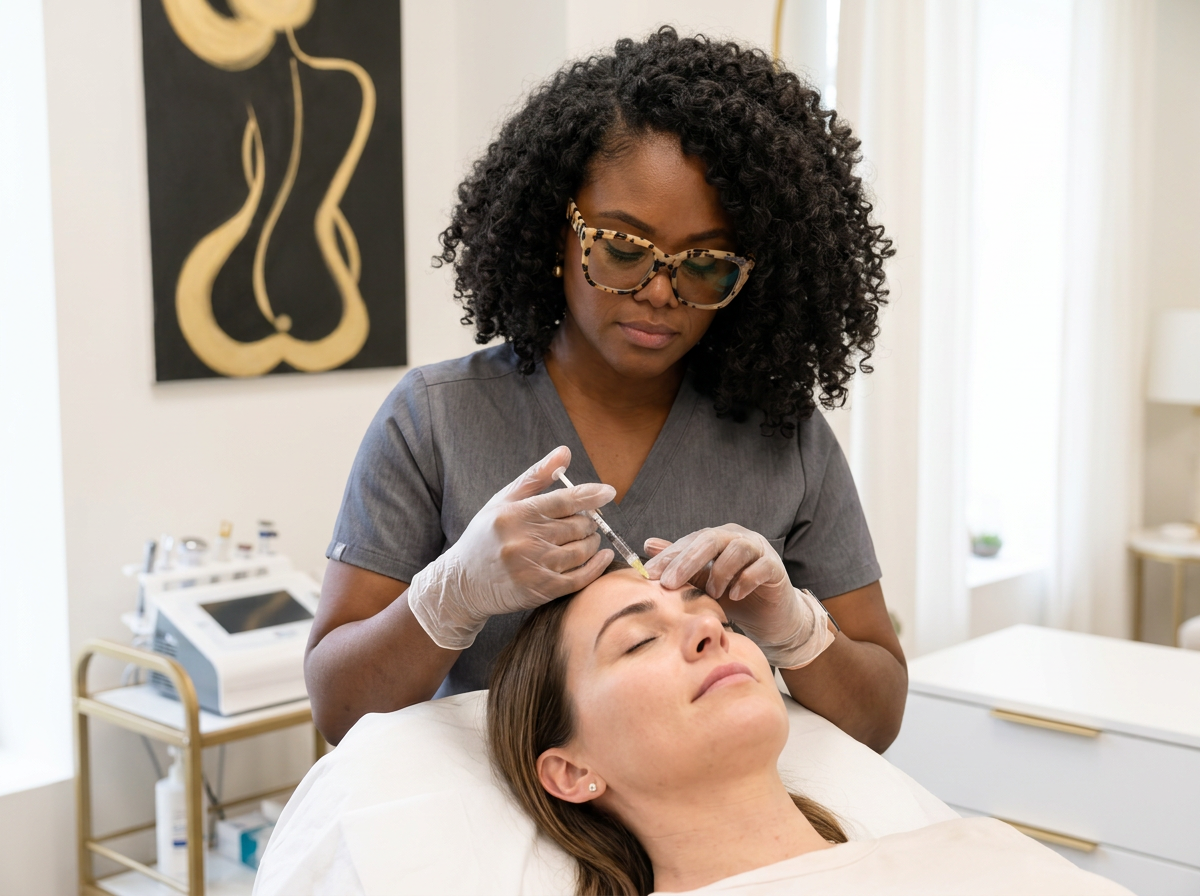
Treatment itself usually involves a series of small injections into selected muscles.
The number and location of injections depend on the treatment plan.
You may notice small raised areas or mild redness immediately after treatment. Your provider should explain what is expected and give you appropriate post-treatment instructions.
What Should You Do After Botox?
Follow the specific instructions your treating professional gives you.
Aftercare recommendations can vary depending on your individual treatment plan and other procedures you may have received.
Most importantly, know how to contact your provider if you have a question or experience something unexpected.
Medical care should not end when you walk out of the treatment room.
Can You Combine Botox With Other Aesthetic Treatments?
Botox can sometimes be part of a broader aesthetic plan, but not every concern needs to be addressed during one appointment.
Depending on your goals, a provider may discuss other treatments for concerns involving:
Skin texture
Pigmentation
Volume
Hydration
Skin quality
Facial contour
Fine lines caused by factors other than muscle movement
Treatments such as HydraFacial, professional facials, skin treatments, or dermal fillers address different concerns and should not automatically be considered interchangeable with Botox.
A thoughtful aesthetic plan asks:
What is causing the concern?
Then it selects the treatment accordingly.
Botox vs. Filler: What's the Difference?
This is another common first-time question.
The simplest explanation is:
Botox: Temporarily reduces targeted muscle activity.
Dermal filler: Adds or restores volume in selected areas depending on the product and indication.
They are not substitutes for one another.
Someone concerned about a dynamic forehead line may need a very different approach from someone concerned about volume changes.
Sometimes a comprehensive facial assessment reveals that the treatment you originally thought you needed isn't actually the most appropriate option.
That is exactly why consultation matters.
How Do You Choose a Botox Provider?
Choosing your injector may be more important than choosing the treatment itself.
Before booking Botox, ask:
What are the provider's medical credentials?
Who medically oversees the practice?
How frequently does the provider perform injectable treatments?
Will they assess your facial movement before treatment?
Will they discuss risks and alternatives?
Can they explain why they recommend a particular treatment plan?
What happens if you have a concern afterward?
Do their results align with your aesthetic preferences?
Be cautious of treatment environments where the conversation focuses only on price per unit before anyone has assessed your face.
Botox involves medication, anatomy, and clinical judgment.
Your consultation should reflect that.
How Much Botox Do You Need?
There is no single number of units that is appropriate for every person.
The amount used depends on factors such as:
Treatment area
Muscle strength
Facial anatomy
Treatment goals
Previous response
Product-specific dosing recommendations
Another person's dose should not be treated as your template.
It's also important to know that Botox Cosmetic units are specific to that product and are not interchangeable or directly comparable with units of other botulinum toxin products.
The goal should be appropriate treatment, not maximizing or minimizing units for its own sake.
What Should Natural-Looking Botox Look Like?
Natural aesthetic medicine is not about making sure nobody moves.
It's about understanding balance.
For many patients, a successful outcome may mean:
Facial expressions still feel like their own
Certain lines appear softer
The face looks rested
Brows remain balanced
Results complement the rest of the face
Friends notice they look refreshed without immediately identifying a procedure
At GlowMD Aesthetics & Wellness, our philosophy is enhancement rather than erasure.
You should not have to choose between aging naturally and caring about how you look.
There is room for thoughtful, conservative aesthetic treatment that respects both your appearance and your individuality.
Thinking About Botox for the First Time?
The best first Botox appointment doesn't begin with an injection.
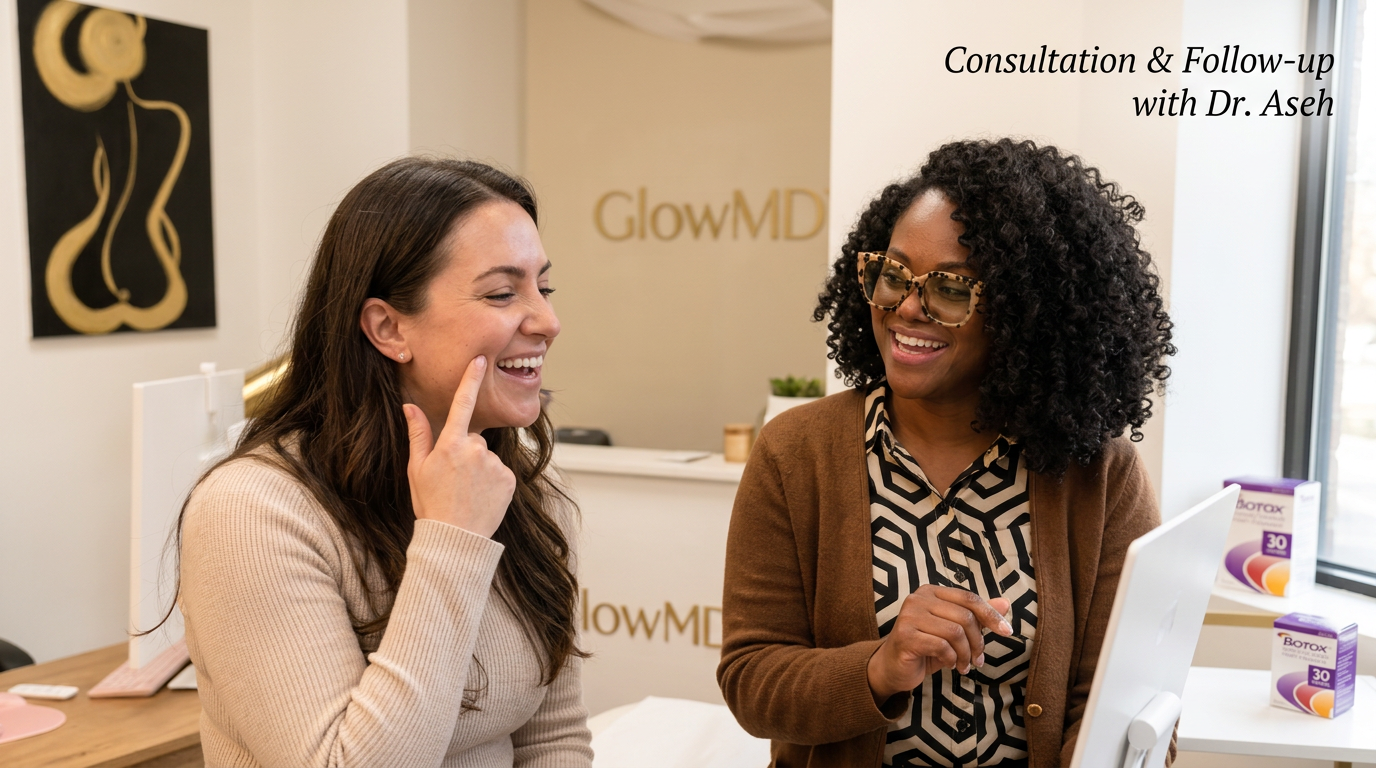
It begins with a conversation.
At GlowMD Aesthetics & Wellness, we take time to understand your facial anatomy, movement, concerns, preferences, medical history, and aesthetic goals before developing a treatment plan.
Whether you're interested in softening forehead lines, frown lines, crow's feet, or simply want to understand whether Botox is appropriate for you, the goal is to help you make an informed decision.
Ready to explore Botox with a physician-led approach?
Book your GlowMD consultation:www.drglowtx.com/book
This article is for general educational purposes only and does not constitute individualized medical advice. BOTOX Cosmetic is a prescription medication with contraindications, warnings, precautions, and potential adverse effects. Treatment suitability, dosage, benefits, risks, and results vary by patient. Consult a qualified healthcare professional before treatment.
